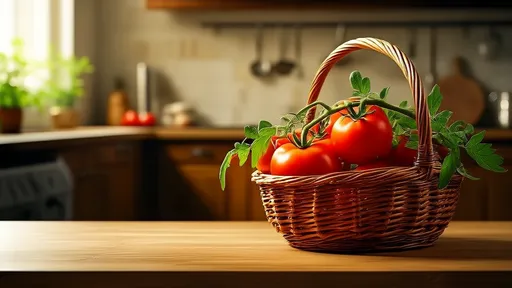
In kitchens around the world, the tomato stands as a culinary cornerstone, celebrated for its vibrant color, juicy texture, and that irreplaceable sweet-acidic flavor that defines countless dishes. Yet, for all its ubiquity, this humble fruit is often the victim of a critical, widespread misunderstanding in how it is stored after purchase. The common practice is to place them in the refrigerator's crisper drawer, a cold tomb that, while extending superficial shelf life, systematically dismantles the very compounds that give a tomato its soul. However, a quiet revolution in food science is challenging this orthodoxy, pointing to a remarkably simple counter-intuitive method: storing tomatoes at room temperature with their stems—the calyx—facing downward. This isn't just a minor tweak; it's a technique that promises to profoundly amplify flavor, transforming your everyday tomato into a peak-season, farmers-market masterpiece.
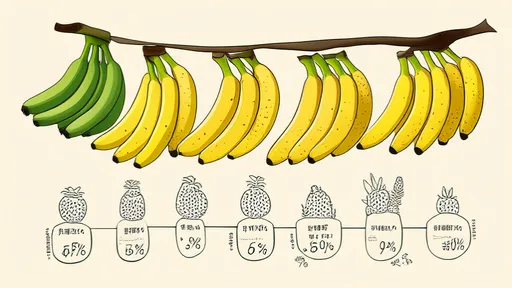
The journey to this discovery begins with understanding what we are trying to preserve. A tomato's flavor is not a single note but a complex symphony conducted by volatile compounds, sugars, and acids. The most important actors in this play are sugars (fructose and glucose), acids (citric and malic), and a host of aroma volatiles like hexenal (which gives that fresh, green-cut scent) and geranial (which provides citrusy notes). When a tomato is harvested, it is often at what is known as the "mature green" stage, meaning it has reached its full size but has not yet begun to ripen. The true magic happens off the vine during the ripening process, a biochemical transformation fueled by ethylene gas, a natural plant hormone.
This ripening process is where the first major storage mistake occurs. The domestic refrigerator, typically set between 2-4°C (35-39°F), is a hostile environment for this delicate dance. Cold temperatures are kryptonite to the enzymes responsible for producing the tomato's signature flavor volatiles. Studies have consistently shown that chilling effectively halts the production of these compounds. Even more damning is the fact that this damage is often permanent; simply bringing the tomato back to room temperature does not reverse the chemical degradation. The fruit might still look plump and red, but its flavor profile has been flattened, leaving behind a mealy, watery, and bland impersonator of its true self. The refrigerator, in its quest to prevent rot, kills the soul of the tomato.
This is why the recommendation for room temperature storage is paramount. Keeping tomatoes at an ambient 20-25°C (68-77°F) allows the enzymatic and metabolic processes to continue unhindered. Ethylene production continues, acids convert into sugars, and those precious volatile aromatics develop and intensify. The tomato doesn't just stay fresh; it actually continues to ripen and improve in flavor, much as it would on the vine. The goal is not to arrest time but to guide the fruit gently to its flavorful peak and then consume it at that perfect moment. Room temperature storage is the foundation upon which great tomato flavor is built.
But the story doesn't end there. If room temperature is the stage, then positioning the tomato stem-side down is the starring role. The reason is as practical as it is impactful: it's all about managing moisture loss and protecting the tomato's most vulnerable point. The scar on the blossom end (the opposite side from the stem) is typically the softest part of the fruit and the most susceptible to bruising and rapid spoilage. Meanwhile, the stem scar, or the calyx end, is not a perfectly sealed port. It is, in fact, the primary site of transpiration—where the tomato loses most of its internal moisture to the surrounding air.
When a tomato is stored on its side or, worse, with its delicate blossom end bearing its weight, several detrimental things happen. Pressure on the blossom end accelerates bruising and breakdown, creating a mushy spot that becomes a gateway for mold and bacteria. Furthermore, moisture escapes freely from the exposed calyx, leading to desiccation. A desiccated tomato loses turgor pressure, becoming soft and wrinkly, and its flavors become unpleasantly concentrated and stale, like a bad sun-dried tomato.
By flipping the tomato so the calyx is on the bottom, you use physics to your advantage. The sturdy shoulders of the tomato now bear all the weight, protecting the vulnerable blossom end from any pressure or damage that would hasten decay. This simple act drastically extends the fruit's usable life at room temperature. Just as importantly, this position changes the dynamics of moisture loss. While some transpiration still occurs from the calyx, the rate is significantly reduced. The internal moisture, seeking the path of least resistance, now has to work against gravity to escape, effectively creating a natural barrier that helps the tomato retain its precious juiciness.
The synergy between these two factors—room temperature and inverted positioning—creates an ideal microclimate for flavor development. The tomato remains undamaged and hydrated, allowing the continuous biochemical processes to produce and preserve its complex flavor matrix without the degrading influences of cold or physical trauma. The result is a tomato that tastes profoundly different: sweeter, because less water loss means sugars aren't concentrated in a negative way but are instead developed fully; more aromatic, because the volatile compounds aren't destroyed by cold; and fuller in umami and acidity, because the cellular structure remains intact. It is the taste of a tomato that has been respected, its potential fully realized.
Adopting this method requires a shift in mindset. It moves us from a philosophy of food preservation based solely on preventing rot to one focused on optimizing quality and sensory experience. It asks us to see fruits and vegetables not as inert objects to be kept "fresh-looking," but as living, breathing organisms still undergoing change. The proof is unequivocally in the eating. The next time you bring home a batch of tomatoes, resist the cold urge of the fridge. Instead, find a bowl or a flat surface on your counter, and place them carefully, with intention, stem-scar down. Give them a day or two. Then, slice into one. The burst of scent that hits your nose, the firm yet yielding texture, and the explosion of balanced, garden-fresh flavor in your mouth will be all the evidence you need. You haven't just stored a tomato; you've perfected it.
By /Aug 20, 2025
By /Aug 20, 2025

By /Aug 20, 2025
By /Aug 20, 2025

By /Aug 20, 2025
By /Aug 20, 2025

By /Aug 20, 2025

By /Aug 20, 2025
By /Aug 20, 2025
By /Aug 20, 2025
By /Aug 20, 2025
By /Aug 20, 2025

By /Aug 20, 2025

By /Aug 20, 2025

By /Aug 20, 2025

By /Aug 20, 2025

By /Aug 20, 2025

By /Aug 20, 2025
By /Aug 20, 2025
By /Aug 20, 2025
