The Forgotten 78 Scottish Clan Patterns Archive

Aug 1, 2025 By

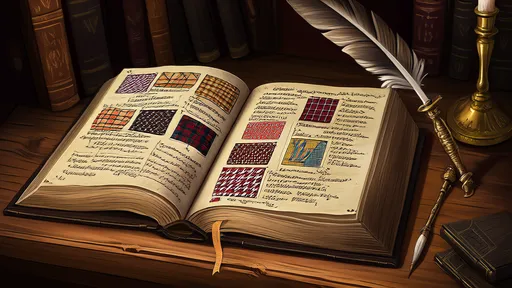
The Scottish Tartan Archives hold within their vaults a treasure trove of cultural heritage, woven into the very fabric of Scotland’s history. Among the well-known clan patterns that adorn kilts and scarves worldwide, there exists a forgotten collection—78 clan tartans that have slipped through the cracks of time. These patterns, once vibrant symbols of familial pride and regional identity, now languish in obscurity, their stories untold and their designs unseen by modern eyes.

The origins of these forgotten tartans are as varied as the clans they represent. Some were created during the 19th-century tartan revival, a period when Scottish identity was being romanticized and commodified. Others date back much further, their origins lost to the oral traditions of Highland families. What unites them is their gradual disappearance from the public consciousness, overshadowed by more commercially successful designs like the Royal Stewart or the Black Watch.

One such forgotten pattern is the MacPherson of Cluny tartan, a deep green and blue weave that once distinguished the clan’s warriors in battle. Unlike the more famous MacPherson red tartan, this variant was reserved for hunting and informal gatherings. Its muted tones were practical for blending into the Highland landscape, yet its subtle elegance made it a favorite among clan elders. Today, few weavers produce it, and even fewer Scots recognize its significance.

Another lost design is the Drummond of Perth tartan, a striking combination of crimson and gold that symbolized the clan’s ties to the Scottish monarchy. Historical records suggest it was worn during the Jacobite uprisings, but after the defeat at Culloden, its use dwindled. The British government’s suppression of Highland culture led many clans to abandon their tartans altogether, and the Drummond of Perth pattern was nearly erased from memory.

The process of rediscovering these tartans is no small feat. Many exist only as fragments in museum collections or as vague descriptions in centuries-old letters. Tartan scholars and historians have spent years piecing together clues—comparing dye samples, analyzing thread counts, and consulting with surviving clan members. In some cases, oral histories have proven invaluable, with elderly descendants recalling childhood stories of their grandparents wearing these now-rare patterns.

Modern technology has also played a role in the revival effort. Advanced textile scanning allows researchers to recreate tartans from the smallest swatches, while digital archives make these designs accessible to a global audience. Yet, even with these tools, some tartans may never be fully restored. The precise shades of natural dyes used in the 18th century, for example, are difficult to replicate with synthetic alternatives, leaving gaps in our understanding of how these patterns truly looked.

Why does this matter? To the casual observer, tartans may seem like mere fashion statements or tourist souvenirs. But to the Scottish people, they are living artifacts—a visual language that speaks to kinship, loyalty, and resilience. Each forgotten tartan represents a chapter in Scotland’s story, one that risks being lost forever if not preserved. Organizations like the Scottish Tartans Authority are working tirelessly to document and revive these patterns, but their efforts rely heavily on public interest and funding.

The cultural significance of these 78 forgotten tartans extends beyond Scotland’s borders. They are part of a shared human heritage, a reminder of how textiles can carry meaning across generations. In an era of mass-produced clothing, these handwoven designs stand as testaments to craftsmanship and identity. Their revival is not just about nostalgia; it’s about reconnecting with a tangible piece of history.

For those who wish to explore these lost patterns, opportunities are slowly emerging. Specialty weavers in the Scottish Highlands have begun producing limited runs of forgotten tartans, often in collaboration with historians. Museums occasionally feature exhibitions on obscure clan designs, and online databases are making it easier than ever to research one’s ancestral connections. Yet, much work remains to ensure these 78 tartans reclaim their place in Scotland’s cultural tapestry.

The story of these forgotten tartans is far from over. With each thread carefully rewoven and each pattern painstakingly reconstructed, they are being brought back to life. They serve as a poignant reminder that history is not just written in books—it’s woven into the very cloth we wear, waiting to be rediscovered by those who care to look.
Recommend Posts
Fashion

Inventory Fabric Bank: A Shared Platform for Designer's Leftover Materials

By /Aug 1, 2025

The fashion industry has long grappled with the issue of textile waste, with millions of tons of fabric discarded annually due to overproduction, deadstock, and design leftovers. In response to this growing concern, innovative platforms like the Fabric Bank have emerged, offering a sustainable solution by connecting designers with surplus materials. One such initiative, the Designer Residual Fabric Sharing Platform, is revolutionizing how creatives source and utilize textiles, turning waste into opportunity.
Fashion

Kyoto Nishijin Weaving: A Thousand Hours Behind 1 Square Meter of Fabric

By /Aug 1, 2025

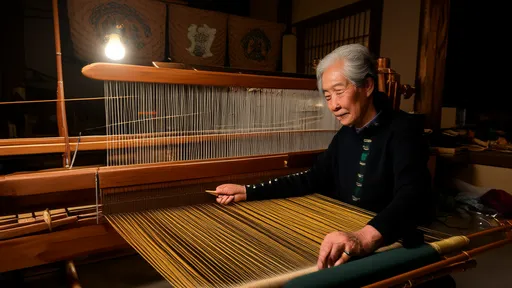
In the quiet backstreets of Kyoto’s Nishijin district, where the whispers of history linger in the wooden machiya townhouses, a centuries-old tradition continues to unfold. Here, master weavers dedicate their lives to creating Nishijin-ori, a luxurious textile so intricate that a single square meter can demand over a thousand hours of labor. This is not merely fabric; it is a testament to patience, precision, and the unbroken thread of Japanese craftsmanship.
Fashion

Breaking Stereotypes: The Coexistence Experiment of Sneakers and Evening Gowns

By /Aug 1, 2025

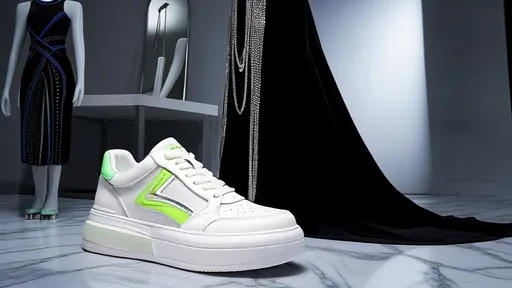
The fashion world has long been governed by unspoken rules—codes that dictate what constitutes "appropriate" attire for every occasion. Among the most stubborn of these sartorial commandments is the strict separation between athletic footwear and formal wear. Yet in recent seasons, a bold sartorial experiment has been playing out on red carpets and runways alike: the deliberate collision of sweat-wicking technology with hand-beaded chiffon.
Fashion

Advanced Mystery Box Marketing: The Enigmatic Gift Box of Unknown Brands

By /Aug 1, 2025

The blind box phenomenon has taken the retail world by storm, evolving from a niche marketing tactic to a mainstream sales strategy. What began as a simple concept – paying for an unknown item – has blossomed into a sophisticated engagement tool that taps into human psychology. The latest iteration? Mystery boxes from unknown brands, a daring twist that's rewriting the rules of consumer engagement.
Fashion

Commute Capsules: 5 Items to Create 20 Office Outfits

By /Aug 1, 2025

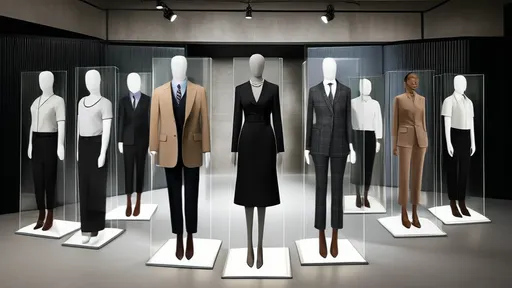
In the fast-paced world of corporate fashion, mastering the art of looking polished without sacrificing precious morning minutes has become an essential skill. The concept of a "commuter capsule" – a minimalist wardrobe built around five versatile pieces – is revolutionizing how professionals approach their workwear. This strategic approach not only simplifies decision-making but also ensures a month's worth of distinctive outfits from just a handful of items.
Fashion

Live Customization: Audience Votes on Design Details

By /Aug 1, 2025

The intersection of live streaming and product design has birthed a fascinating new phenomenon - real-time customization through audience participation. Across multiple industries, from fashion to furniture, creators are handing over design decisions to their viewers through interactive polls and voting systems during live broadcasts. This democratization of design processes represents more than just a marketing gimmick; it's fundamentally altering how products get conceived and who gets to participate in their creation.
Fashion

Indian Hand Block Printing: Modern Simplification of 108 Processes

By /Aug 1, 2025

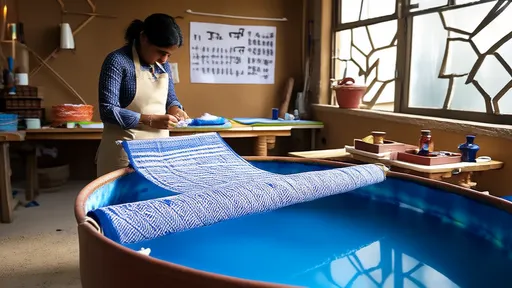
The ancient art of Bandhani tie-dye from India's western regions has long been celebrated for its intricate patterns and vibrant colors, created through an astonishing 108-step process passed down through generations. Today, contemporary artisans and designers are reimagining this heritage craft for modern markets while striving to preserve its soul.
Fashion

Paris Feather Workshop: The Million Feather Project Behind Haute Couture

By /Aug 1, 2025

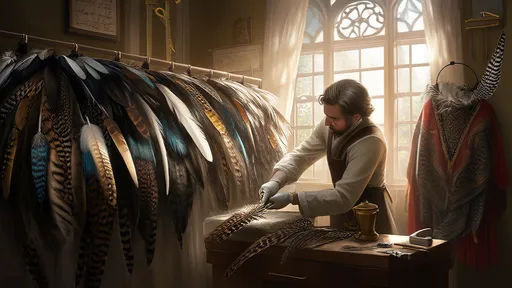
The world of Parisian haute couture has long been shrouded in mystique, where extraordinary craftsmanship meets astronomical price tags. Yet few realize that behind the glittering gowns and show-stopping creations lies an even more astonishing secret: the feather workshops supplying these houses operate on an industrial scale that would make most manufacturers blush. Welcome to the hidden universe where millions of feathers annually transform into objects of desire.
Fashion

Accessory Tone Setting Rule: Necklace Length Alters Style Direction

By /Aug 1, 2025

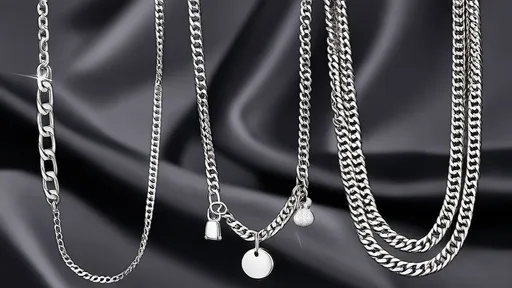
The length of a necklace isn't just a matter of measurement—it's a silent conductor of style, an unspoken language that dictates the mood of an outfit. From chokers that whisper rebellion to opera-length strands that exude old-world glamour, the distance between clasp and pendant holds surprising power over fashion narratives. This subtle yet transformative element of accessorizing follows its own set of unspoken rules, where mere centimeters can shift bohemian ease into corporate polish or transform daytime casual into evening drama.
Fashion

Immersive Buyer's Shop: Redefining Shopping Spaces with Theater Concepts

By /Aug 1, 2025

The retail landscape is undergoing a quiet revolution, one that blurs the lines between commerce and performance art. Immersive boutique stores, particularly those adopting theatrical concepts, are redefining what it means to shop. These spaces no longer function as mere transactional environments but as carefully curated stages where every product plays a supporting role in a larger narrative. The result is an experience that feels less like purchasing and more like participating in a meticulously designed production.
Fashion

AR Dressing Mirror: Virtual Makeup Matching with Fashion Style

By /Aug 1, 2025

The fashion and beauty industries are undergoing a digital revolution, and at the forefront of this transformation is the AR Try-On Mirror. This cutting-edge technology is redefining how consumers interact with fashion, allowing them to experiment with virtual outfits and makeup in real time. No longer confined to traditional fitting rooms, shoppers can now explore endless style possibilities with just a swipe or a tap. The integration of augmented reality into retail spaces is not just a novelty—it’s becoming a necessity for brands aiming to stay relevant in an increasingly digital marketplace.
Fashion

Disassemblable Design: Modular Clothing for Easier Recycling

By /Aug 1, 2025

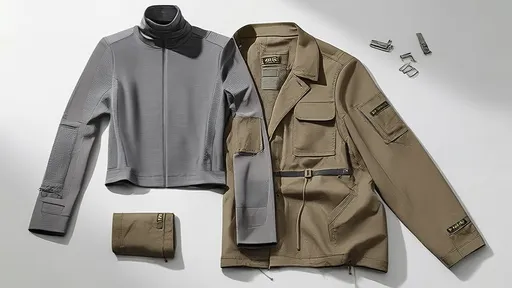
The fashion industry stands at a crossroads, where sustainability is no longer a choice but a necessity. Among the innovative approaches emerging to address textile waste, modular clothing with disassembly capabilities has captured the imagination of designers and environmentalists alike. This concept reimagines garments as temporary assemblies of components, each with distinct lifespans and recycling pathways—a radical departure from traditional monolithic designs destined for landfills.
Fashion

Localization Production Movement: 150-Kilometer Radius Supply Chain

By /Aug 1, 2025

The global supply chain disruptions of recent years have sparked a quiet revolution in manufacturing and procurement strategies. Across industries, businesses are reevaluating their dependence on far-flung suppliers and embracing what's becoming known as the 150km radius supply chain model. This approach isn't just about risk mitigation—it's evolving into a comprehensive philosophy of localized production that's reshaping regional economies.
Fashion

Water-Saving Dyeing Competition: A Comparative Analysis of Levi's and G-Star Technologies

By /Aug 1, 2025

The denim industry has long been criticized for its environmental footprint, particularly when it comes to water consumption. Traditional indigo dyeing processes can consume staggering amounts of water, with some estimates suggesting it takes over 1,000 liters to produce a single pair of jeans. In recent years, two denim giants – Levi's and G-Star RAW – have emerged as frontrunners in developing water-saving dyeing technologies. Their competing approaches reflect different philosophies in sustainable innovation while addressing the same critical issue.
Fashion

Packaging Revolution: Plantable Tags Sprout into Spice Plants"

By /Aug 1, 2025

The packaging industry is undergoing a quiet revolution, one that blurs the line between product and purpose. Among the most intriguing innovations is the emergence of plantable tags—small, biodegradable labels embedded with seeds that transform into herbs or flowers after use. These tags, often attached to clothing or household items, represent a shift toward sustainability that goes beyond recycling. They invite consumers to participate in the lifecycle of the product long after its initial purpose has been served.
Fashion

Left Bank Parisian Style: The Dress Code of Intellectuals"

By /Aug 1, 2025

The Left Bank of Paris has long been synonymous with intellectualism, artistic freedom, and a certain je ne sais quoi in sartorial expression. Unlike the more ostentatious Right Bank, the Rive Gauche cultivates an air of effortless sophistication—a style that whispers rather than shouts. Here, the intellectuals, writers, and philosophers have forged a sartorial language that speaks volumes about their ideals, often without uttering a single word. This is not fashion for fashion’s sake; it’s a coded uniform for those who live by the pen, the brush, or the dialectic.
Fashion

Fashion Library: The Economics of Membership-based Wardrobe Rentals

By /Aug 1, 2025

The concept of a fashion library, where members can rent designer clothing for a fraction of retail prices, is revolutionizing the way we think about wardrobe economics. This model, which blends sustainability with luxury, appeals to a growing demographic of consumers who crave variety without the commitment—or the cost—of ownership. The rise of these membership-based rental services signals a shift in consumer behavior, one that prioritizes access over accumulation.
Fashion

Vacation Layered Outfits: Creating Volume with Lightweight Materials

By /Aug 1, 2025

The art of vacation dressing lies in mastering the delicate balance between comfort and style. Nowhere is this more evident than in the growing trend of lightweight layered outfits that create surprising volume without bulk. As travelers seek versatile wardrobe solutions that transition seamlessly from beachside cafes to sunset cocktails, designers and stylists have responded with ingenious approaches to airy fabrics that defy their weightless nature.
Fashion

Italian Shoemaking Dynasty: Three Generations of Hand-Stitched Welts

By /Aug 1, 2025

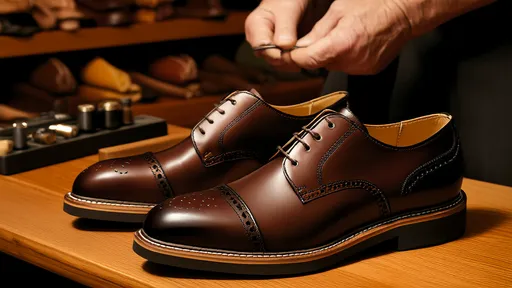
In the heart of Italy’s shoemaking tradition, where cobblestone streets echo with centuries of craftsmanship, one family has quietly perfected the art of hand-welted footwear. For three generations, the Sartori family has stitched their legacy into every pair of shoes they create, resisting the tide of mass production with an almost devotional commitment to the hand-stitched welt—a technique that defines not just their craft, but their identity.
Fashion

The Forgotten 78 Scottish Clan Patterns Archive

By /Aug 1, 2025

The Scottish Tartan Archives hold within their vaults a treasure trove of cultural heritage, woven into the very fabric of Scotland’s history. Among the well-known clan patterns that adorn kilts and scarves worldwide, there exists a forgotten collection—78 clan tartans that have slipped through the cracks of time. These patterns, once vibrant symbols of familial pride and regional identity, now languish in obscurity, their stories untold and their designs unseen by modern eyes.